8 Kitchen Cabinet Door Styles That Work in Newfoundland Homes
This guide from Elite Kitchens + Design, a custom cabinet maker based in Torbay, NL, walks through the eight kitchen cabinet door styles most relevant to Newfoundland homes, explaining which profile suits which housing type, what each option costs relative to the others, and how to make the final decision before committing to a renovation. Every recommendation is grounded in the specific architecture of the Avalon Peninsula, from Victorian heritage homes in downtown St. John’s to new builds in Paradise and CBS.
Key Takeaways
- Cabinet door style is both a design decision and a cost variable. More complex profiles cost more to manufacture, shaker and flat/slab are the most cost-efficient custom options; inset doors are the most expensive.
- NL’s housing stock spans heritage Victorian homes in downtown St. John’s, new suburban builds in Paradise and CBS, and outport-influenced interiors across the Northeast Avalon. The right door style is different for each.
- Shaker style kitchen cabinets are the dominant profile in NL new builds: versatile, clean, and cost-efficient. Raised panel suits heritage and transitional homes. Flat/slab suits contemporary renovations. Beadboard suits outport-influenced and cottage interiors.
- Glass-front doors are not a whole-kitchen choice, they are a targeted design decision for one or two cabinet runs. Reeded glass is currently the most requested glass detail in premium NL kitchen renovations.
- Inset cabinet doors are the most precision-demanding option and cannot be reliably achieved by stock or semi-custom suppliers. Only a genuine on-site custom cabinet maker can execute them correctly.
- Elite Kitchens + Design does not use thermowrap finishes. They peel and chip over time and offer significantly less longevity than painted or stained solid wood and MDF finishes.
- The finish decision changes the character of any door profile more than the profile itself. Decide on your finish before you decide on your profile.
Topics Covered Kitchen cabinet door style profiles for NL homes · Shaker, flat/slab, raised panel, beadboard · Five-piece, glass-front, and inset cabinet doors · Painted vs. stained finishes · Cost comparisons by door profile · How to choose the right style for your kitchen’s architecture · Elite Kitchens + Design’s consultation process
Who This Is For Homeowners on the Avalon Peninsula (St. John’s, Torbay, Paradise, CBS, and surrounding communities) who have decided to renovate their kitchen with custom cabinetry and are now narrowing down their door style, finish, and hardware choices before booking a consultation.
Author / Source: Elite Kitchens + Design, a custom cabinet maker based at 918 Torbay Rd, Torbay, NL, serving the Avalon Peninsula with on-site fabricated custom cabinetry since 1987.
Why Cabinet Door Style Is the Most Visible Decision in Your Renovation
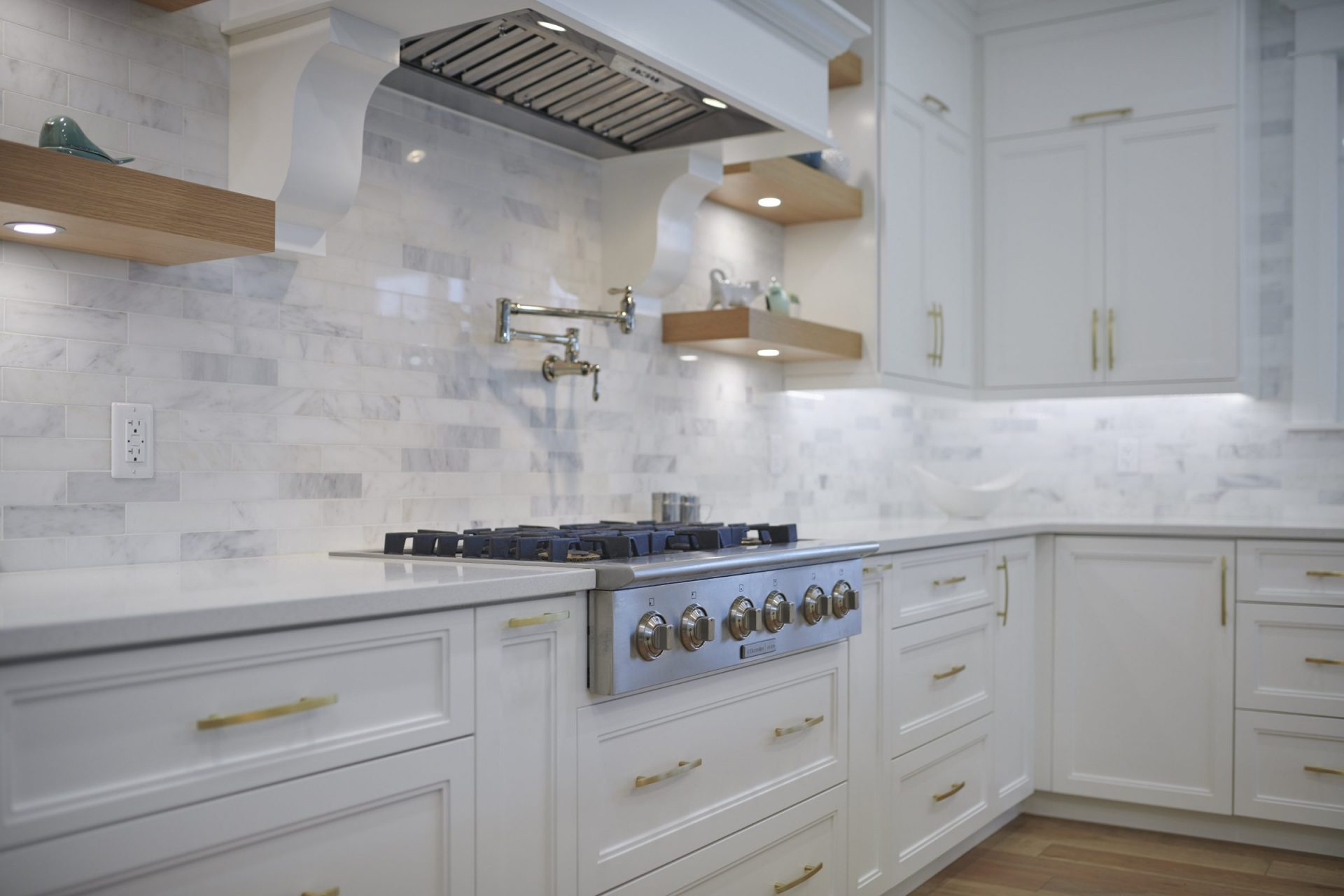
Your cabinet door is the face of your kitchen. Everything else in the room takes its visual cue from it. Get the door profile right and the rest of the design follows. Door style is also a cost variable. More complex profiles require more machining time. A raised panel door costs more per unit than a shaker door of identical size, and shaker costs more than flat slab. The kitchen cabinet styles you choose directly affect how far your renovation budget goes. You can browse photos on Houzz for inspiration, but the difference between profiles is something you need to see in person, photos do not communicate texture, depth, or scale the way a physical sample does.
Newfoundland’s housing stock ranges from Victorian and Edwardian heritage homes in downtown St. John’s to post-war bungalows in Mount Pearl and CBS to modern new builds across Paradise and the newer subdivisions of Torbay. The right cabinet door style is different for each. Before you choose a style, read our custom kitchen cabinet cost and renovation guide for the full cost picture.
1. Shaker: The Style That Fits Almost Every Newfoundland Kitchen
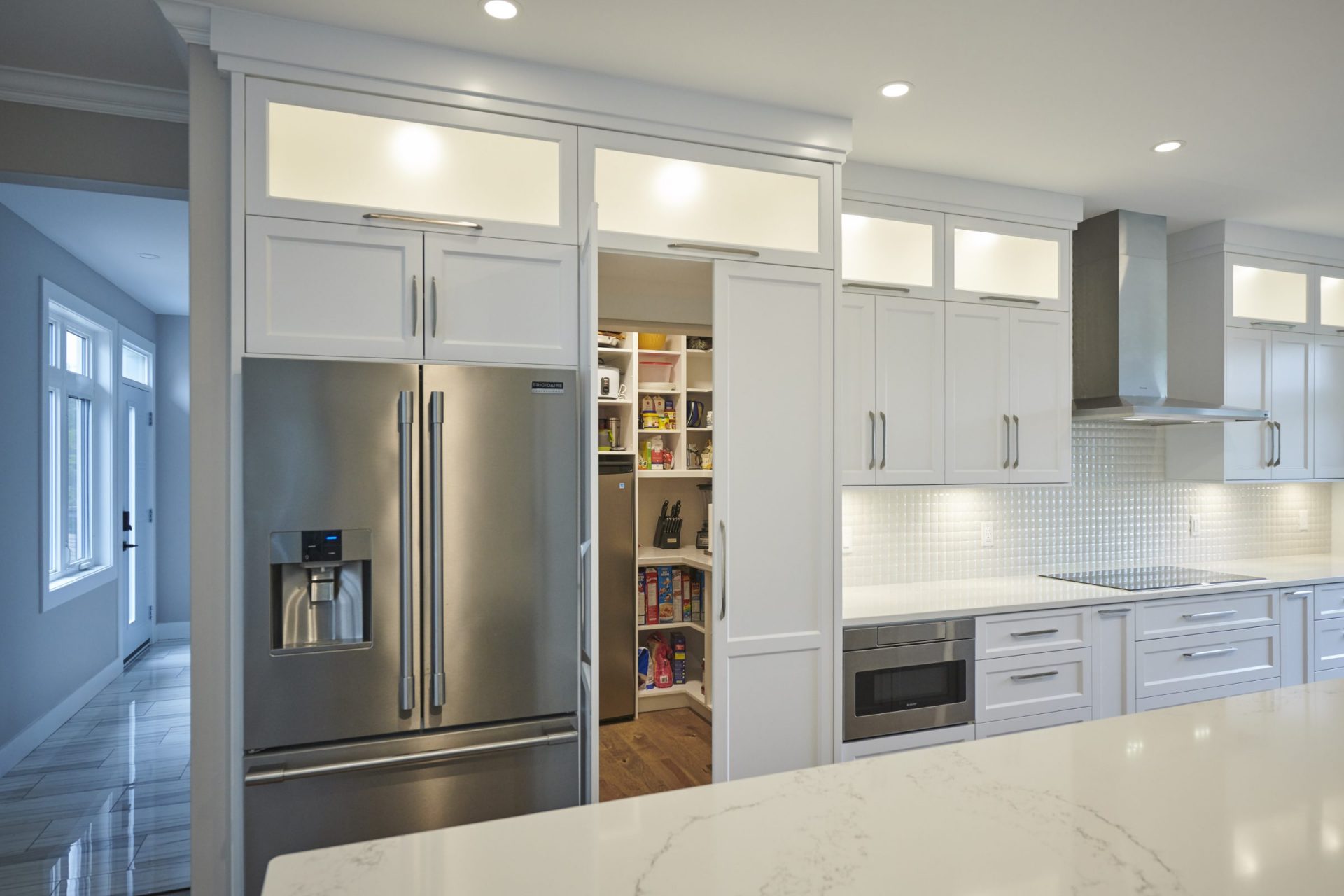
The shaker door—a recessed, flat-centre panel within a clean, square frame—is the most widely used cabinet door profile in Newfoundland new builds. In the newer subdivisions across Paradise, CBS, and Torbay, shaker suits both modern and transitional interiors without demanding a strong stylistic commitment. It pairs with every countertop material, works with both painted and stained finishes, and maintains its visual appeal over the long life of a kitchen.
Practically, the recessed panel means no ornate crevices to collect grease or cooking debris. Shaker doors also photograph well. Among custom kitchen cabinet doors Canada craftspeople offer, the shaker is consistently the most requested profile for exactly this combination of practicality, versatility, and clean aesthetics.
Cost context: Shaker is one of the most efficient custom door profiles to manufacture. The geometry is clean and repeatable, keeping fabrication time lower than more complex profiles. It is not the cheapest option (flat/slab is), but it delivers significant design value for its cost.
One context where shaker is the wrong choice: a heavily ornate Victorian or Edwardian heritage kitchen, where the simplicity of shaker reads as thin against elaborate period Victorian style kitchen cabinets and decorative mouldings. In those homes, a raised panel or five-piece is the better fit.
2. Flat/Slab: The Minimalist Choice for Contemporary Interiors
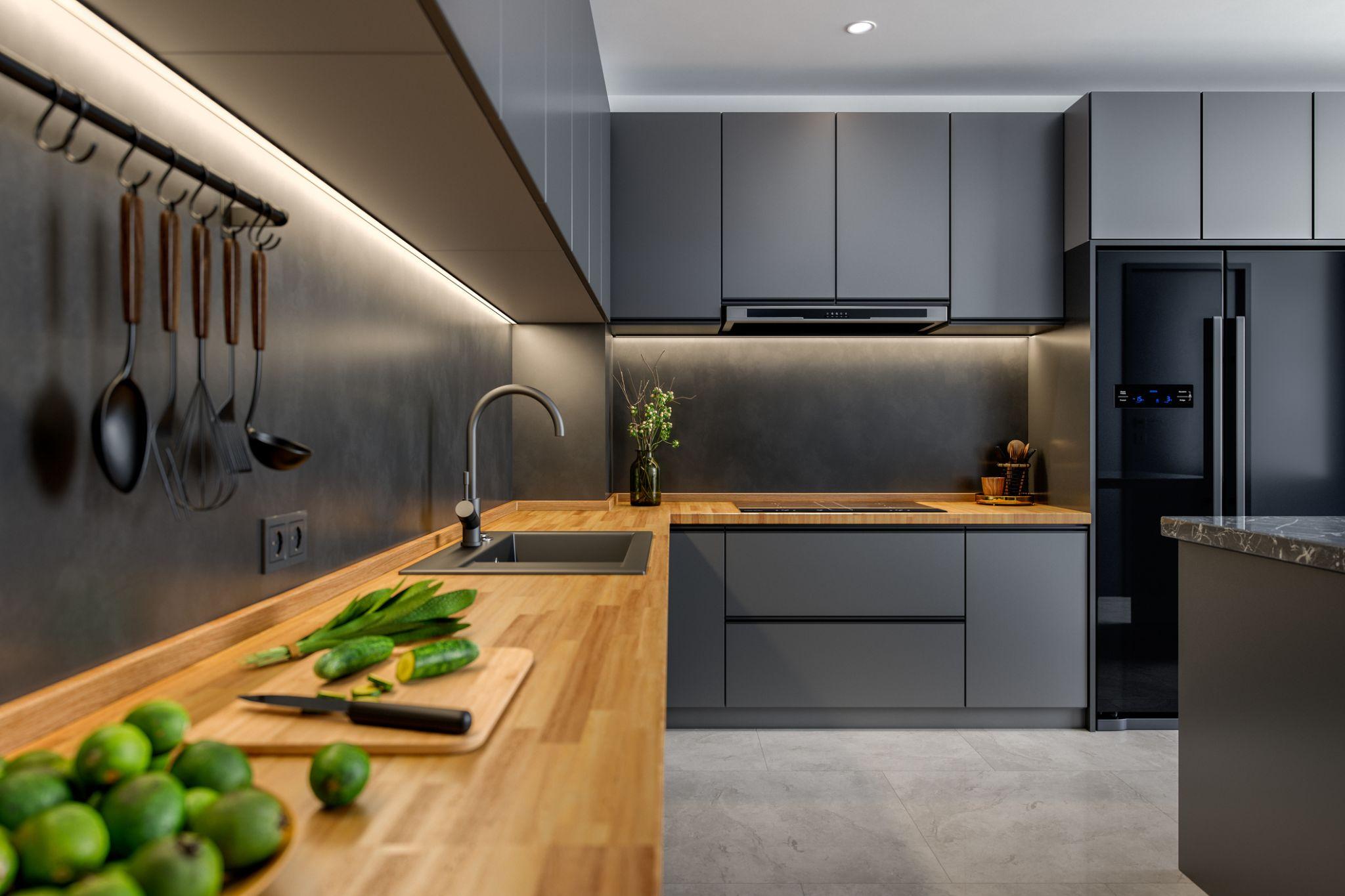
The flat/slab door is a single, uninterrupted panel with no frame, profile, or applied detail. It is the defining door style of the contemporary and minimalist kitchen, which increasingly the preferred choice for renovations where more traditional homes are being renovated with clean, open-concept interiors.
Slab doors make a kitchen feel larger and more unified, particularly in a matte or low-sheen paint that reduces light breaks across the door face. In open-concept layouts where the kitchen flows into a living or dining area, the visual continuity of slab cabinetry is an asset.
Practical consideration: Slab doors with full-overlay frameless installation have a tight reveal between doors; fingerprints and minor alignment variations are more visible than on shaker. In households with young children or heavy daily use, slab doors need more frequent cleaning.
Cost context: Slab is the most cost-efficient custom door profile. It requires no routing, profiling, or applied moulding, just a panel cut to dimension and finished. For budget-conscious renovations that still want a contemporary custom result, a slab is a smart choice.
3. Raised Panel: For Heritage and Transitional Kitchens
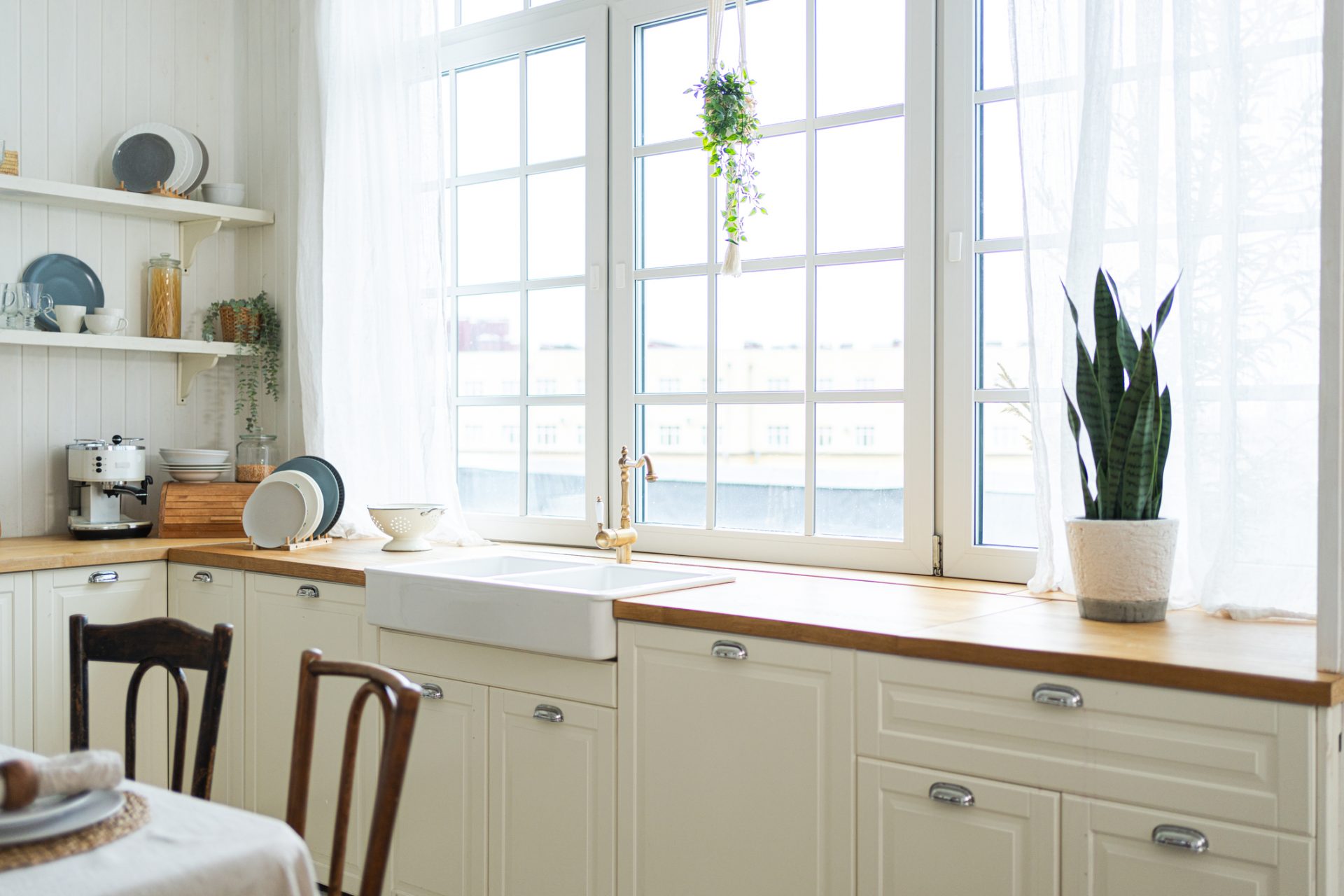
The raised panel door has a centre panel that sits proud of the surrounding frame, the traditional counterpart to the shaker’s recessed minimalism. It is associated with classic, heritage, and transitional kitchen design, and it is the right choice for homes in conservation zones orany interior where the kitchen is expected to have a warm, formal, traditional presence.
Raised panel suits period mouldings, decorative trim, and natural wood staining. In a Victorian or Edwardian, where the baseboards are tall and the window casings are detailed, raised panel cabinetry reads as belonging. A shaker in the same room often does not.
Cleaning consideration: Raised panels have more surface variation than shaker or slab, the stepped profiles provide more places for dust and grease to settle. A quality conversion varnish or lacquer finish mitigates this, but it is a real maintenance factor in a heavily used kitchen.
Cost context: A raised panel is more complex to manufacture than a shaker or slab, the profiling and panel work require additional machining time. Expect to pay 10–20% more per door compared to a shaker door of equivalent size and material.
4. Beadboard: The Heritage Detail That Suits Outport-Influenced Interiors
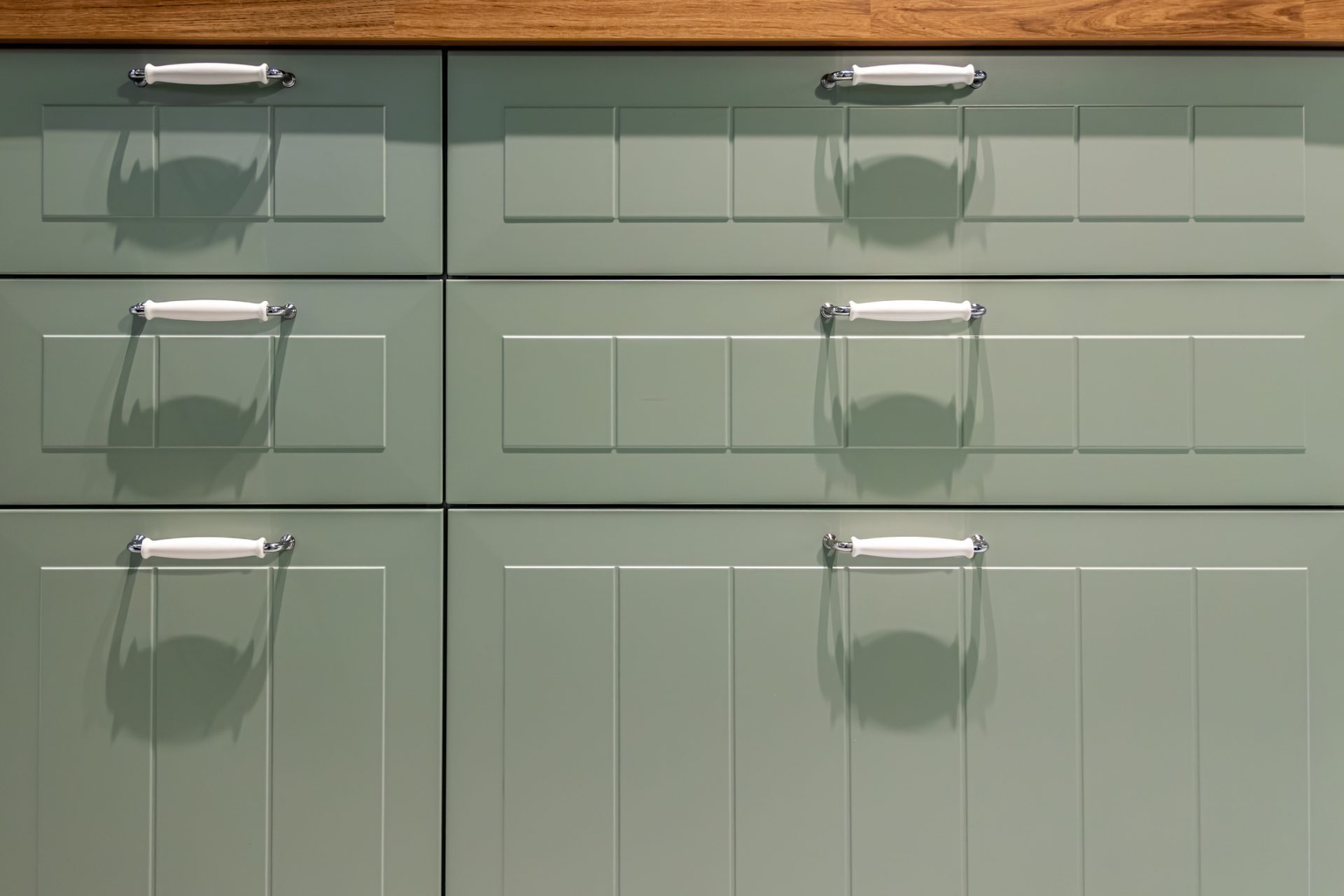
Beadboard cabinet doors—a recessed panel filled with vertical bead detail, similar to traditional tongue-and-groove panelling—bring a farmhouse and cottage aesthetic with a genuinely local reference point in Newfoundland. The vertical bead pattern is part of the visual language of outport homes and fishing community kitchens, and it suits any kitchen where the owner wants to lean into a distinctly NL sense of place. Beadboard reads as warm, relaxed, and lived-in, the opposite of the precision of inset cabinetry or the sleekness of flat/slab. It suits lakehouses, rural properties outside the Northeast Avalon, and heritage interiors across the province.
Where it does not work: Modern open-concept kitchens. Beadboard’s texture can feel mismatched against sleek appliances and quartz countertops; the detail is contextual, and it earns its place in the right home.
Cost context: Broadly similar to shaker in manufacturing complexity, though the bead detail requires slightly more machining precision. Mid-range in the custom cabinet cost spectrum.
Not sure which cabinet door style suits your kitchen? Come into the Elite Kitchens + Design showroom in Torbay. We’ll walk you through every profile, finish, and hardware option with physical samples in hand. Get in touch to book your consultation.
5. Five-Piece Door: The Classic That Reads Well in Transitional Kitchens
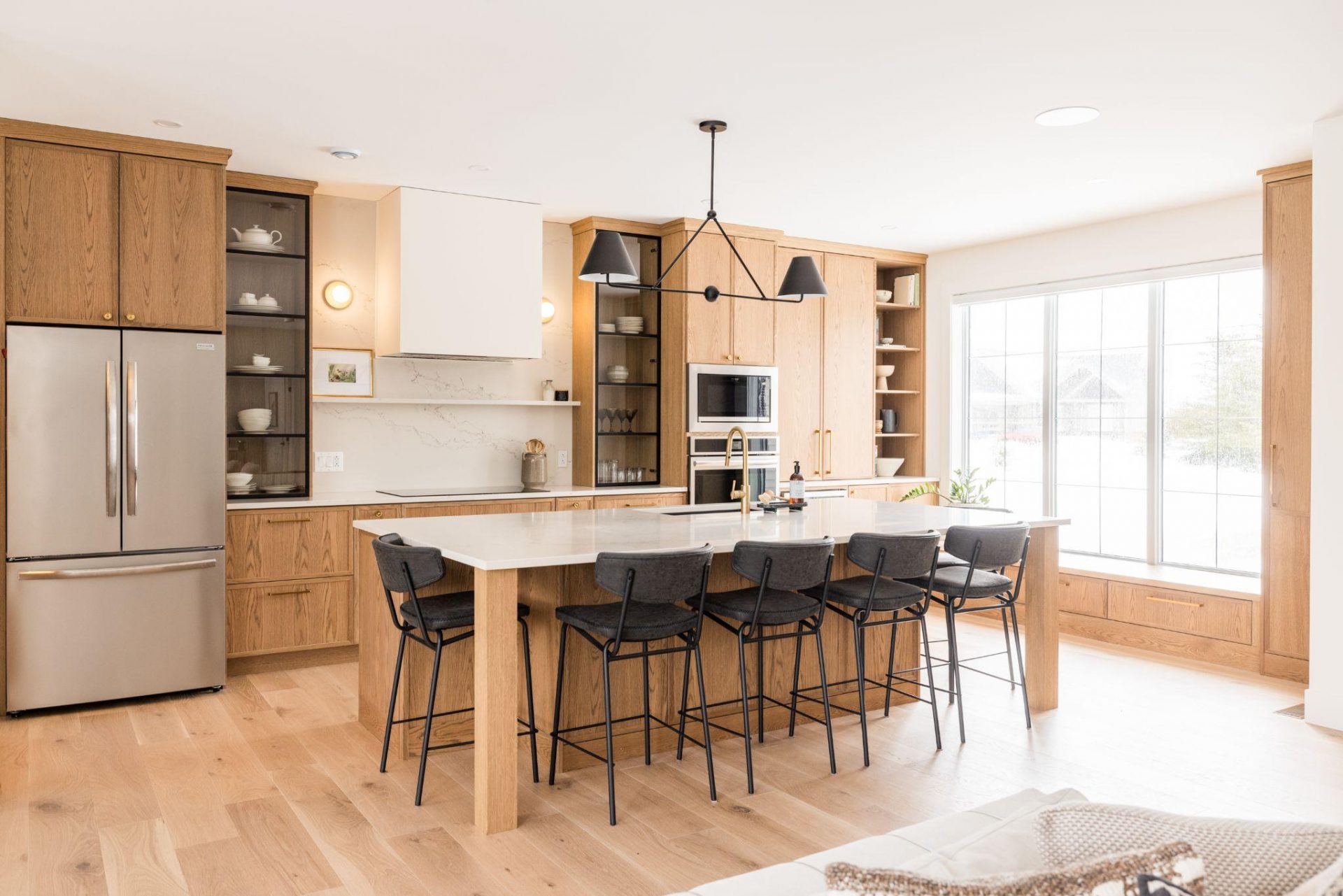
The five-piece door, four frame members plus a centre panel, describes a profile with a slightly more traditional framing character than shaker and a flat (not raised) centre panel. The frame may have a subtle bevel or routed edge that gives the door a furniture-like quality without the formality of raised panel.
This is the preferred choice for transitional kitchen renovations—homes that are not strictly modern but are not heritage-style either. It suits a wide range of finishes and hardware combinations without locking the homeowner into a strong stylistic statement. From local practice: five-piece doors in white or warm white with brushed gold hardware are the most consistently requested combination in Elite Kitchens + Design’s current projects across the Avalon Peninsula.
Cost context: Mid-range, more complex than flat/slab, comparable to shaker, less than raised panel.
Not sure which profile is right for your kitchen? Come into the Elite Kitchens + Design showroom in Torbay, we’ll walk you through every profile, finish, and hardware option with physical samples in hand. Get in touch to book your consultation.
6. Glass-Front Cabinet Doors: Purposeful, Not Decorative
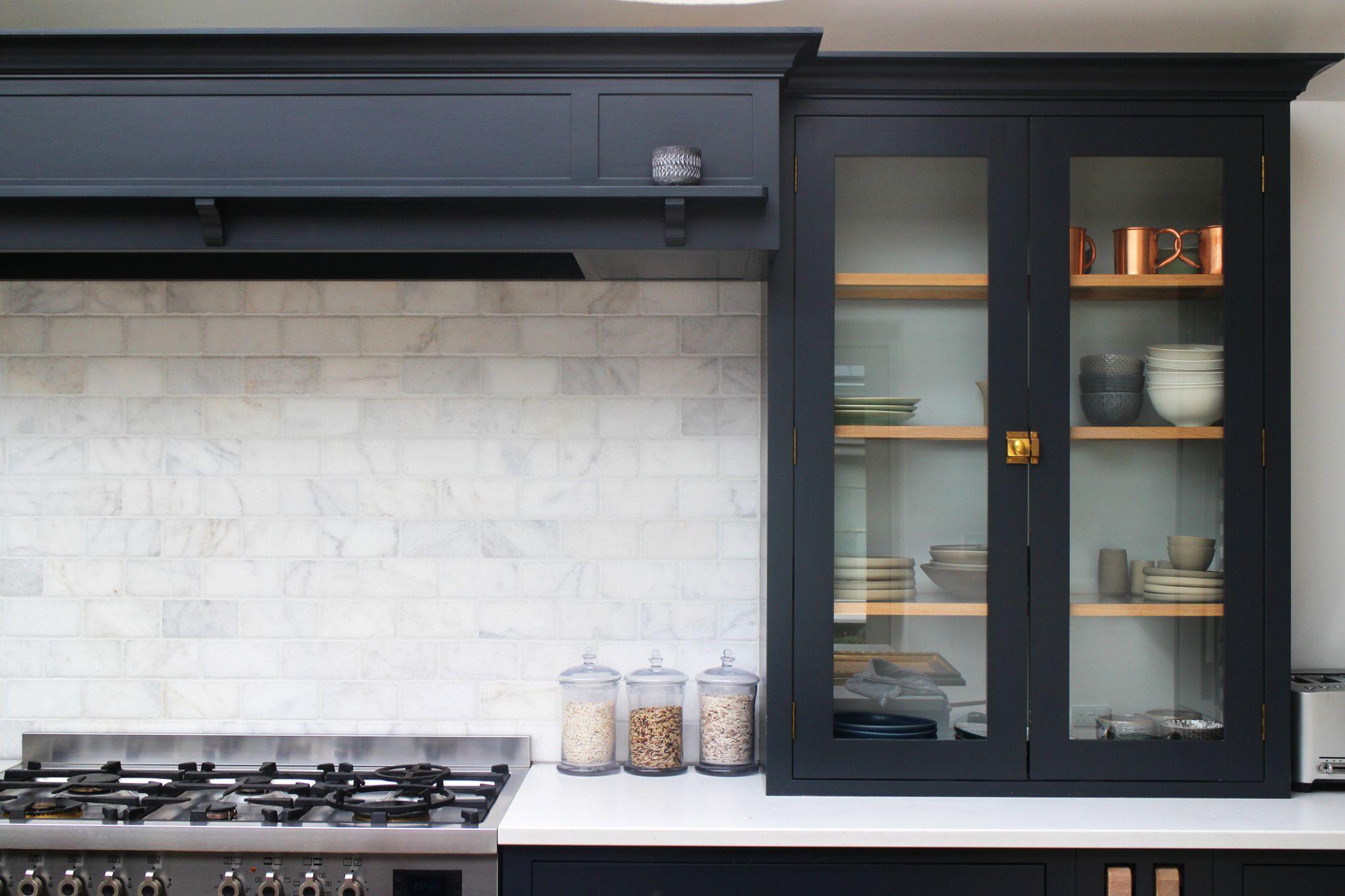
Glass-front cabinet doors are not a whole-kitchen choice. They are a targeted design decision for one or two specific cabinet runs, a pair of uppers flanking the range hood, or the cabinets on either side of a kitchen window. Used deliberately, they are one of the most effective design tools in a kitchen renovation. They break up a long run of opaque door panels, allow display of glassware or ceramics the homeowner wants visible, and create the effect of visual depth in smaller kitchens.
Glass type options: Clear glass gives a full, unobstructed view which requires immaculate organization. Frosted glass diffuses the view while admitting light. Reeded (fluted) glass adds vertical texture and partially obscures cabinet interiors, currently the most requested glass detail in premium NL kitchen renovations, for its ability to add visual interest without demanding showroom-level organization.
Cost context: Glass-front doors cost more than solid doors of equivalent size; the glass, frame routing, and glazing installation all add per-door cost. Use them selectively.
7. Inset Cabinetry in Newfoundland: Moisture Risks and the Panel Alternative
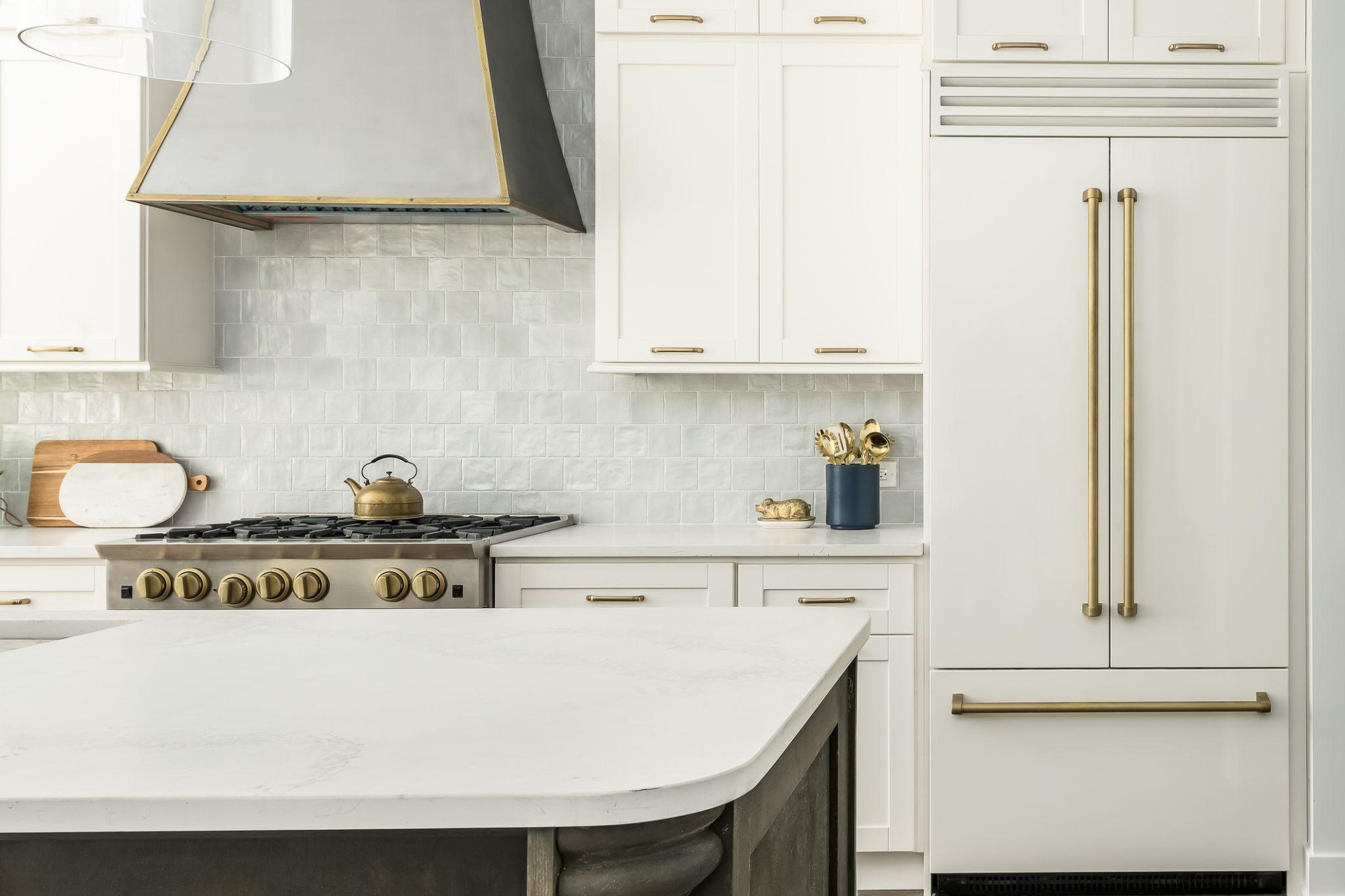
Inset cabinet doors sit flush inside the cabinet frame rather than overlaying it. When closed, the door face is coplanar with the surrounding frame. It is a fitted, furniture-like appearance associated with built-in cabinetry in period homes and high-end kitchen design.
The manufacturing and installation tolerances required for a properly hung inset door are incredibly tight. The door and frame must be machined to exacting dimensions, accounting for the natural movement of wood and the seasonal expansion and contraction caused by Newfoundland’s humidity cycles. Because mass-produced lines cannot execute true inset cabinetry reliably, achieving this look typically requires the kind of precision standards the Architectural Woodwork Manufacturers Association of Canada (AWMAC) governs for custom millwork. This is what distinguishes a genuine custom kitchen design and build operation from a supplier assembling imported components.
Because true inset doors carry an extreme structural risk in climates with a high degree of seasonal humidity variation—such as that of Newfoundland—Elite Kitchens + Design does not offer traditional inset construction. Instead, we achieve that high-end, furniture-like flush appearance through a specialized panel-based approach. We build out the cabinet and door construction so the face reads as completely flush and seamless, delivering the exact same luxury aesthetic without the seasonal warping and sticking risks of a true inset door.
Cost context: Achieving this flush, premium look is the most precision-demanding and expensive door approach in a custom cabinet project; it is the right choice for a homeowner who wants a truly distinctive kitchen and is prepared to invest accordingly.
8. Painted vs. Stained Finishes: The Decision That Changes Everything
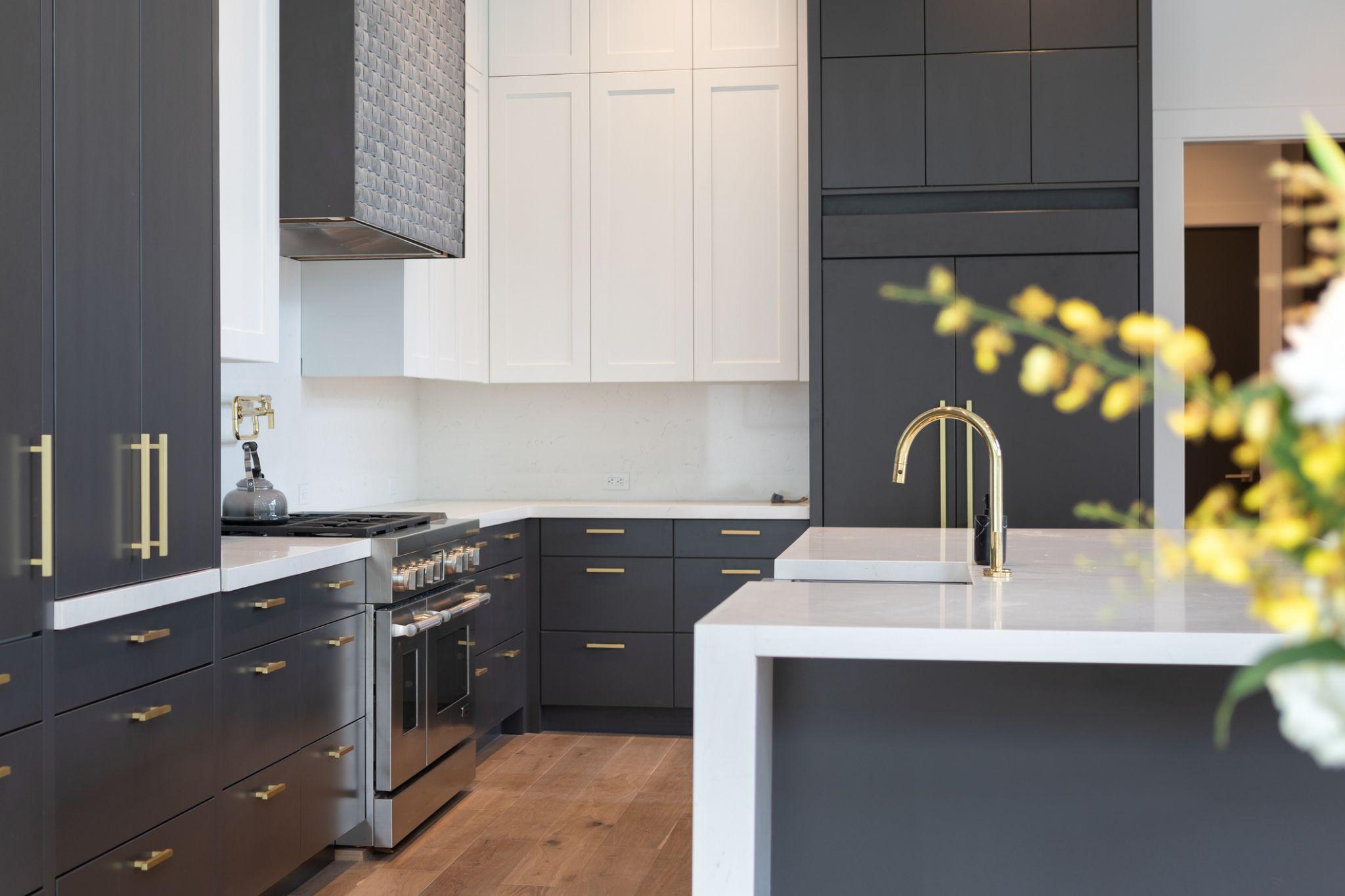
This is not a door profile but a finish decision and it belongs on this list because it is the other half of every door style choice. The same shaker door looks fundamentally different in a painted white satin finish versus an open-grain-stained walnut finish. The profile is the structure; the finish is the character.
Painted finishes give a clean, consistent colour across the cabinet face and work best with MDF doors, which have no grain and take paint evenly. The most popular painted cabinet colours in NL kitchens are white, off-white, deep navy, and sage green. For kitchen cabinet colour ideas, Benjamin Moore and Sherwin-Williams both have strong product ranges used widely across Avalon Peninsula projects, but colour selection is best done in person with physical chip samples under your kitchen’s actual lighting.
Stained finishes preserve and highlight the natural wood grain. They are suitable for solid-wood or wood-veneer doors. Staining MDF produces an uneven, flat result. Oak, maple, and walnut are the most commonly used species in custom NL kitchen cabinetry. White oak with a light natural stain is the fastest-growing finish preference in Elite Kitchens + Design’s current projects; contemporary in feel, warm in practice.
Two-tone kitchens, which use different finishes on upper and lower cabinets, or on the island versus the perimeter, work well but require deliberate colour matching from the start of the design process. Adding a second tone as an afterthought rarely produces the intended result.
A note on thermowrap: Elite Kitchens + Design does not use thermowrap finishes. Thermowrap peels and chips over time, particularly near heat and moisture sources. It offers significantly less longevity than painted or stained finishes, and we do not stand behind it.
How to Choose the Right Kitchen Cabinet Door Styles for Your Specific Kitchen
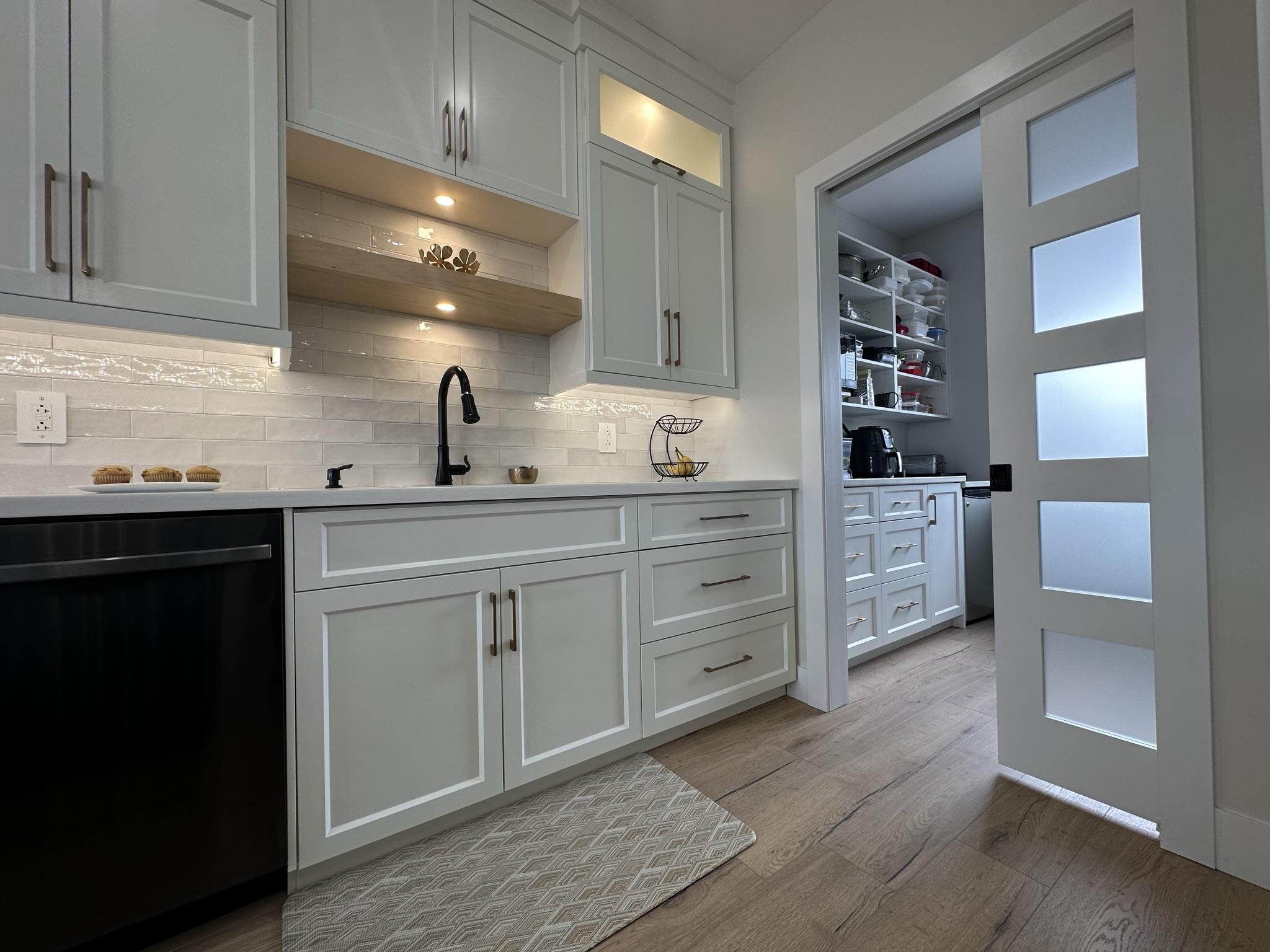
You have seen eight options. Here is how to narrow them down to one.
1. Identify your kitchen’s architecture first. Is the home a heritage build? A post-war bungalow? A new construction? The building sets the design frame before any style decisions are made. Raised panel and five-piece suit traditional and transitional homes. Shaker and slab suit modern and contemporary interiors. Beadboard suits heritage and port-influenced spaces.
2. Decide on your finish before your profile. Painted or stained? Make this call before you commit to a door profile. A painted finish shortlists you toward shaker, slab, and five-piece. A stained finish points toward raised-panel, shaker, and beadboard styles. The finish drives the profile more than the profile drives the finish.
3. Request physical door samples in at least two profiles. The difference between the shaker and the five-piece is subtle in photographs and significant in person. The difference between reeded glass and frosted glass is impossible to evaluate on a screen. Physical samples in your hand, ideally held against your actual countertop material and wall colour, are the only reliable way to make this decision.
4. Think about your hardware before committing to a profile. The combination of door style and pull hardware determines the overall kitchen character more than either element alone. A shaker door with a simple bar pull reads contemporary. The same shaker door with a cup pull reads transitional. Match the hardware choice to the profile and the finish in a single deliberate decision.
Elite Kitchens + Design’s team at the Torbay showroom walks every client through this decision as part of the consultation with physical samples across every profile and finish, hardware options in hand, in a purpose-built showroom space. Visit our custom kitchen cabinets service page to learn more about the full scope of our offerings.
For the full cost picture and renovation planning framework, read our how to budget and plan your full kitchen renovation guide before booking your consultation.
Not sure which cabinet door style suits your kitchen? Come into the Elite Kitchens + Design showroom in Torbay for custom kitchen cabinets service. We’ll walk you through every profile, finish, and hardware option with physical samples in hand. Get in touch to book your consultation, we can help you explore everything from ideas for above kitchen cabinets to a full kitchen overhaul.